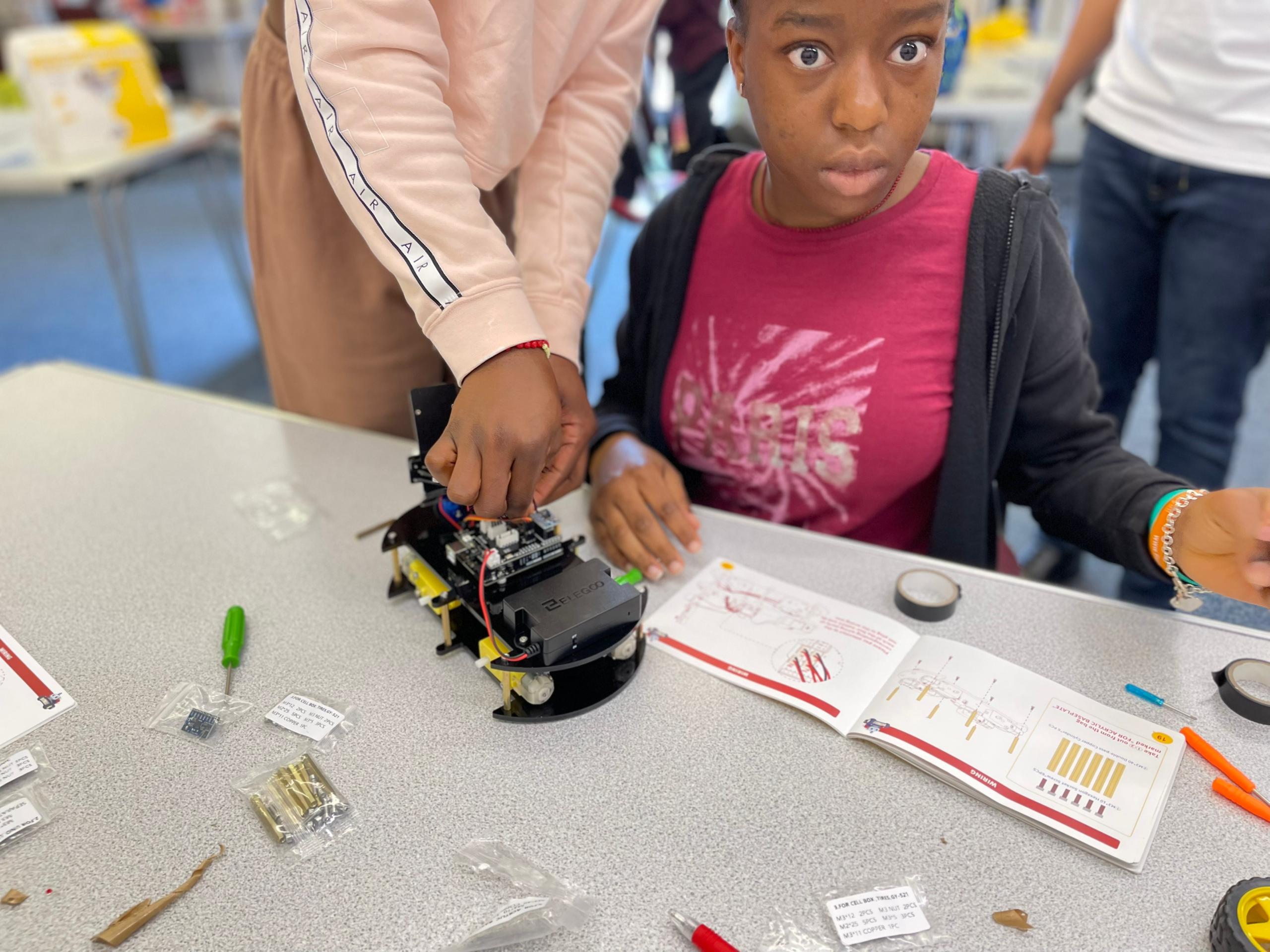
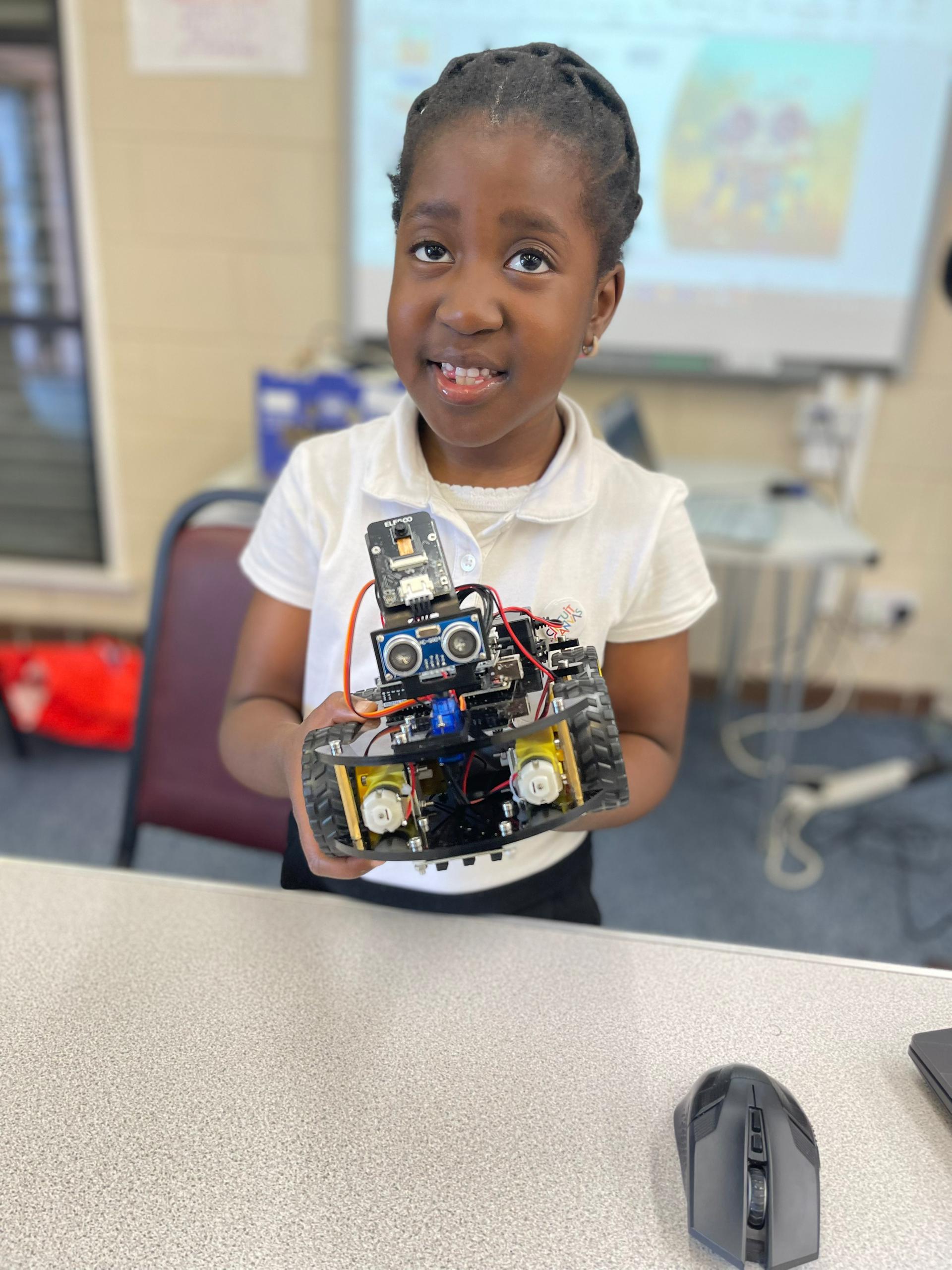
The statistics surrounding women in the technology sector are a well-documented challenge. Despite decades of awareness, only about 26% of the tech workforce in the UK is female. The drop-off in engagement typically occurs during the early teenage years.
At Circuit Canvas, addressing this disparity isn't just an afterthought—it represents the core of our pedagogical design. We are proud to report that our overall program participation is 45% female/non-binary. Here is how we achieved it.
Representation Matters
You cannot be what you cannot see. When recruiting volunteers and guest speakers, we aggressively prioritize female software engineers, founders, and data scientists. When a 12-year-old girl sees a successful woman demonstrating robotics, the mental barrier of "this isn't for me" immediately begins to fracture.
We don't just change the curriculum. We change the environment where the learning happens.
Project-Based Contextual Learning
Traditional computer science classes often focus heavily on abstract math and algorithms disconnected from the real world. Research shows that young women engage significantly higher with STEM when it is contextualized around social impact.
Instead of teaching Python variables through arbitrary math tasks, we teach them by building carbon-footprint calculators. We teach data mapping by analyzing local pollution metrics. When technology is framed as a tool for empathy and community improvement, engagement skyrockets across all demographics.
By fostering collaborative, supportive, and impact-driven classrooms, we are proving that the gender gap is not a lack of interest, but a lack of inclusive design. And we are successfully rewriting the code.